
Leon Franke · 13 October 2026
Tracing Connections Between Visitor Interaction Signals and Shifts in Automated Indexing Priorities Within Dynamic Database-Driven Web Environments
Visitor interaction signals such as click-through rates, dwell times, and navigation paths connect directly to adjustments in how automated indexing systems allocate resources across dynamic database-driven sites, and researchers have documented these patterns through large-scale log analyses conducted over multiple years. Data from web infrastructure studies shows that search engine crawlers monitor engagement metrics to recalibrate crawl frequencies, particularly when content updates occur through backend database queries rather than static file changes. Those who've examined server records note that pages receiving higher interaction volumes often receive elevated priority in subsequent indexing cycles, while low-engagement sections see reduced attention even if their update frequency remains constant.
How Interaction Metrics Influence Crawler Behavior
Studies indicate that signals like scroll depth and return visits correlate with shifts in resource allocation, and this holds especially true in environments where database calls generate page variants on the fly. Observers tracking these systems find that crawlers adjust their revisit schedules based on aggregated user data, which effectively signals content relevance and freshness to indexing algorithms. In October 2026, reports from infrastructure monitoring projects revealed that sites employing real-time database synchronization experienced measurable changes in crawl distribution after implementing engagement tracking layers. Researchers discovered that these adjustments help optimize bandwidth usage across large-scale deployments without requiring manual configuration changes.
Take one analysis of e-commerce platforms where product pages pulled from relational databases showed faster re-indexing when session durations exceeded industry averages, and similar patterns appeared in content management systems handling news feeds. The connections become clearer when examining structured navigation layers that guide users through database-generated categories, because these paths create measurable trails that indexing systems interpret as importance markers. Data reveals that sites with high exit rates on dynamically loaded sections often see deprioritization, prompting administrators to refine query optimization routines.
Database Dynamics and Priority Recalibration
Dynamic database environments present unique challenges because content changes originate from structured queries rather than file modifications, and this distinction affects how crawlers detect and respond to updates. Evidence from multiple platform audits suggests that interaction signals help bridge the gap by providing external validation of which database outputs warrant immediate attention. Those monitoring these processes observe that automated systems increasingly factor in user behavior alongside traditional signals like last-modified headers or sitemap entries. What's notable is the way high-engagement database records trigger more frequent deep crawls, whereas low-interaction tables remain at baseline intervals until other indicators change.
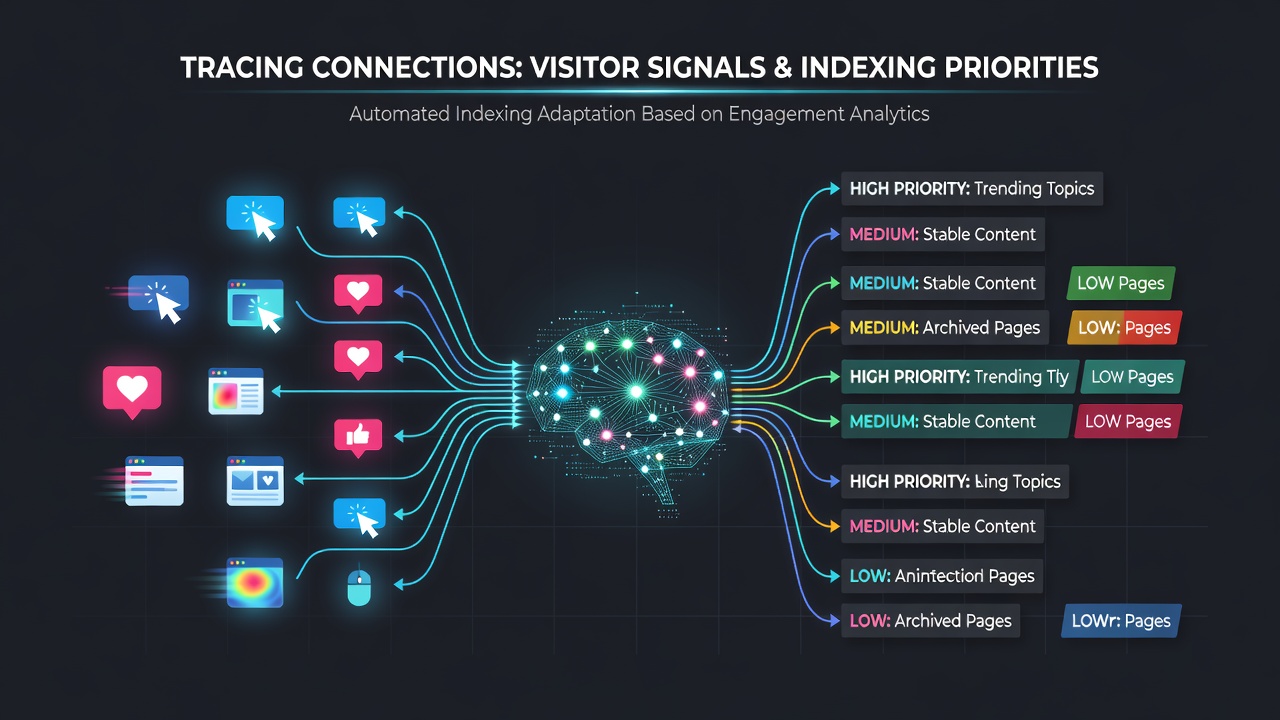
Analyses conducted across various hosting configurations demonstrate that visitor signals can accelerate indexing of newly generated database entries when engagement spikes occur shortly after publication. For instance, one study of educational resource sites found that pages with elevated return visit rates from logged-in users received priority boosts within 48 hours, even when the underlying database update cadence stayed unchanged. This pattern holds because indexing algorithms treat sustained interaction as confirmation that the content merits deeper processing and storage in search indexes.
Technical Mechanisms Behind the Shifts
Automated indexing systems employ feedback loops that incorporate behavioral data from multiple sources, and these loops allow priority adjustments without direct human intervention. According to documentation from the World Wide Web Consortium on web architecture, resource allocation strategies benefit from external signals that reflect real-world usage patterns in dynamic setups. Researchers have mapped how session-level metrics feed into crawler decision trees, resulting in differentiated treatment for database-backed pages that otherwise appear similar at the structural level. The process involves continuous evaluation of click patterns and time-based engagement, which in turn influences the depth and frequency of subsequent visits by indexing bots.
Additional findings from computational research at institutions such as those affiliated with the Association for Computing Machinery highlight cases where database-driven sites with strong internal linking tied to user flows experienced more consistent indexing coverage. These observations underscore the interplay between front-end interactions and backend priority systems, particularly when content variations arise from parameterized queries. Platforms handling frequent database refreshes show pronounced effects, as crawlers use engagement data to distinguish high-value updates from routine changes.
Conclusion
The documented connections between visitor interaction signals and indexing priority shifts continue to shape how dynamic database environments receive attention from automated systems, and ongoing monitoring provides clearer pictures of these relationships. Data collected through server logs and analytics integrations shows consistent patterns across different site types and update frequencies. As database technologies evolve, the role of behavioral signals in guiding resource allocation remains a central factor in maintaining efficient indexing operations.